

BREAST REVISION
The Breast Implant Revision Wave Is Here: Why More Women Are Updating, Downsizing, Replacing—or Removing Their Breast Implants
Breast augmentation has evolved. So have the women who had it.
For decades, breast augmentation has been one of the most popular aesthetic procedures in plastic surgery. But today, a different trend is emerging.
Recent consumer data reported by NewBeauty found that approximately 71% of surveyed breast implant patients had considered breast revision surgery. Implant age accounted for 29.4% of revision decisions, while 25.6% were associated with changes in breast appearance over time.
Schedule a breast revision consultationJohn L. Burns Jr., MD, FACS — board-certified Dallas plastic surgeon, 25+ years in aesthetic breast surgery and complex breast revision.
Breast Implants Are Not Lifetime Devices
One of the most important things every breast augmentation patient should understand is that breast implants are not considered lifetime devices.
The FDA explains that the longer someone has breast implants, the greater the likelihood of developing complications, some of which can require additional surgery. At the same time, implant lifespan varies by patient—there isn't a universal date when every implant must automatically be replaced.
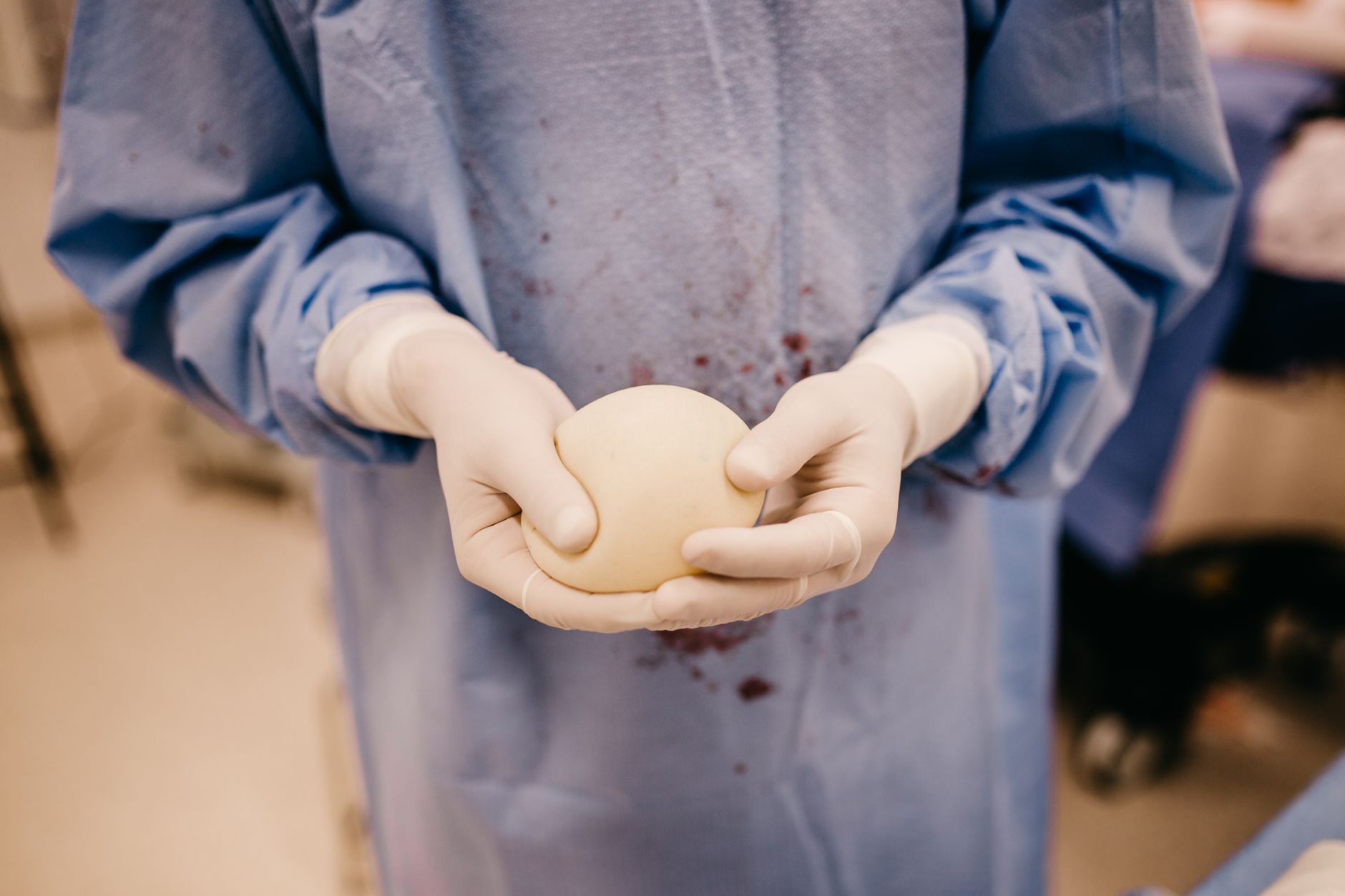
Revision may eventually be considered because of:
Implant rupture
Capsular contracture
Implant malposition
Bottoming out
Rippling or implant visibility
Breast sagging
Asymmetry
Pregnancy-related changes
Significant weight loss
Changing aesthetic preferences
Desire for larger or smaller implants
Desire to remove implants altogether
That distinction matters.
An implant reaching a certain age does not automatically mean it needs to come out. Instead, the decision should consider the implant itself, surrounding breast tissue, symptoms, appropriate imaging, breast appearance, and the patient's current goals.
Learn More About Revision Breast Augmentation with Dr. BurnsWhy Is There a Breast Implant Revision Wave Now?
Part of the answer is timing.
Many women who underwent breast augmentation years ago are now entering a different phase of life. NewBeauty's 2026 reporting reflects this: implant age and changes in breast appearance were two major reasons patients were considering revision.
Modern breast revision also has tools that weren't necessarily available—or weren't being used in the same way—when many patients underwent their original procedures.
But the story is bigger than aging implants.
Depending on the patient, contemporary revision surgery may incorporate:
New implant styles and dimensions
More sophisticated implant sizing
Pocket reconstruction
Internal mesh support
Fat grafting
Breast lifting
Subfascial implant placement
Muscle repair
Improved correction of animation deformity
Explantation with volume restoration
The result is a major philosophical shift.
Revision is no longer necessarily an implant exchange. It can be a complete breast restoration.

Before and after breast implant revision surgery by Dr John Burns in Dallas Texas
Reason #1: Your Breast Implants Are Getting Older
Implant age alone doesn't automatically mean surgery is necessary.
If your breasts remain soft and comfortable, you like their appearance, and your implants are intact, reaching an arbitrary anniversary does not necessarily mean they need to be replaced.
Older silicone implants do, however, require appropriate surveillance.
Current FDA guidance recommends that asymptomatic patients with silicone gel-filled breast implants receive their first ultrasound or MRI 5–6 years after implantation and every 2–3 years thereafter. If symptoms occur or an ultrasound produces an uncertain result for rupture, MRI is recommended.
Why?
Because a silicone implant rupture can sometimes be silent. The breast can initially look and feel relatively normal even when the implant shell has ruptured.
Current FDA guidance recommends that asymptomatic patients with silicone gel-filled breast implants receive their first ultrasound or MRI 5–6 years after implantation and every 2–3 years thereafter. If symptoms occur or an ultrasound produces an uncertain result for rupture, MRI is recommended.
An older implant evaluation also provides an opportunity to ask whether the original:
size
shape
position
breast tissue
Reason #2: Your Breasts Changed—Even if Your Implants Didn't
This is one of the most important concepts in breast revision.
Sometimes there is absolutely nothing wrong with the implant.
The breast around it changed.
Breast tissue continues to age after augmentation and can be affected by:
Breast tissue continues to age after augmentation and can be affected by:
- Pregnancy
- Breastfeeding
- Weight gain
- Weight loss
- Menopause
- Hormonal changes
- Gravity
- Skin aging
Patients may develop:
- Breast ptosis
- Lower nipple position
- Loss of upper-pole fullness
- Lower-pole stretching
- Tissue thinning
- Visible implant edges
- Rippling
- A "waterfall" appearance as breast tissue descends over the implant
An implant that fit beautifully 15 years ago can eventually appear too low, too large, too round, too heavy, or simply out of proportion.
And this is where revision becomes more complicated than changing implants.
If the breast envelope has changed, a new implant alone may not solve the problem.
The surgical plan may require a breast lift, pocket repair, internal support, fat grafting, or a change in implant position or size.
ASPS similarly describes contemporary implant revision as potentially including a lift or reduction, implant-pocket reshaping, and changing implant size, shape, or style.
Reason #3: "I Don't Want Them This Big Anymore"
One of the most significant aesthetic shifts Dr. Burns sees today is toward smaller, lighter and more natural-looking breasts.
That doesn't mean large implants are "out."
It means many women are reassessing what works for them now.
Someone who loved significant upper-pole fullness at 25 may want something very different at 45.
Her priorities might now include:
- Easier exercise
- Less breast weight
- Better clothing fit
- More natural proportions
- Less upper-pole fullness
- A more athletic silhouette
- Smaller, softer-looking breasts
NewBeauty's reporting similarly describes changing size preferences as part of the contemporary revision landscape.
But downsizing is often misunderstood.
Downsizing isn't always as simple as trading a 400 cc implant for a 250 cc implant.
Imagine placing a smaller object into a pocket that has stretched around something considerably larger.
The pocket doesn't automatically shrink to fit.
ASPS notes that downsizing can require internal work to tighten the capsule around the new, smaller implant.
Dr. Burns may therefore combine implant downsizing with:
- Capsulorrhaphy
- Pocket tightening
- Internal mesh support
- Breast lift
- Lower-pole correction
- Fat grafting
- Inframammary-fold reconstruction
Breast implant downsizing before and after by Dallas plastic surgeon Dr John Burns
Reason #4: Bottoming Out or Implant Malposition
A breast implant is supposed to sit within a carefully created pocket.
Over time, that pocket can stretch or change.
Bottoming Out
The implant descends too low, stretching the lower breast and increasing the distance between the nipple and breast crease.
Lateral Displacement
The implant shifts toward the outer chest or armpit and may become especially noticeable when lying down.
Superior Malposition
The implant remains excessively high.
Symmastia
The implants migrate too far toward the center of the chest.
Double Bubble
The natural breast fold and implant contour become misaligned, creating a visible secondary crease.
The important concept is this:
Implant malposition is often a pocket problem—not an implant problem.
Simply removing the implant and inserting another one into the same damaged pocket may reproduce the same issue.
ASPS notes that revision surgery can require implant-pocket reshaping, and mesh may sometimes be used to restore and reinforce the pocket.
Dr. Burns frequently uses internal sutures and, when appropriate, internal mesh bra support to rebuild the foundation supporting the implant.
Before and after: bottoming out breast implant correction with pocket reconstruction by Dr. John Burns.
Reason #5: Capsular Contracture
Every breast implant develops scar tissue around it.
This normal scar envelope is called a capsule.
In most women, the capsule remains soft and relatively thin.
Capsular contracture occurs when the scar tissue tightens excessively around the implant.
Patients may notice:
- Increasing firmness
- Breast pain
- Hardness
- Distortion
- A high-riding implant
- Increasing asymmetry
Treatment varies considerably according to the individual problem.
Revision may include:
- Implant removal
- Implant exchange
- Capsulotomy
- Partial or complete capsulectomy when indicated
- Pocket change
- Internal support
- Different implant selection
- Fat grafting for additional tissue coverage
Recurrent capsular contracture can be especially challenging.
Dr. Burns' approach is to determine why the contracture developed and construct the revision around the underlying anatomy rather than simply repeating the original procedure.
Reason #6: Breast Implant Rupture
Both saline and silicone implants can rupture.
Saline Rupture
A saline rupture is generally more noticeable because the implant deflates as the saline is absorbed.
Silicone Rupture
Silicone rupture can be harder to identify.
The FDA notes that many silicone implant ruptures are "silent," meaning neither the patient nor physician may immediately recognize them through symptoms or physical examination alone.
When rupture requires revision, the procedure isn't necessarily limited to:
old implant out → identical implant in.
It can be an opportunity to reassess:
- Implant volume
- Profile
- Implant type
- Pocket position
- Capsule
- Skin quality
- Breast shape
- Tissue coverage
- Need for a breast lift
The breast may be very different from the breast that existed during the original augmentation.
The revision should reflect that.
CONCERNED ABOUT AN IMPLANT? REQUEST A CONSULTATIONReason #7: Animation Deformity
Women with implants placed beneath the pectoralis muscle can sometimes experience animation deformity.
When the chest muscle contracts, it can visibly move or distort the implant.
For an athletic woman, the problem can become especially noticeable during:
- Weightlifting
- Push-ups
- Yoga
- Pilates
- Strength training
- Other chest-intensive exercise
Dr. Burns treats selected animation-deformity cases by removing the implant, repairing the pectoralis muscle toward its normal anatomical position, and creating a new implant pocket when appropriate. His revision practice specifically includes correction of animation deformity.
For appropriately selected patients, converting from a submuscular pocket to an above-muscle or subfascial approach can eliminate the implant's interaction with pectoral contraction.

Before and after: breast implant animation deformity correction by Dr. John Burns in Dallas.
Reason #8: Rippling and Thinning Breast Tissue
Natural breast tissue changes throughout life.
With aging, menopause, significant weight loss, or naturally thin tissue, there may eventually be less coverage over the implant.
Implant edges can become easier to see or feel.
Rippling may become increasingly visible.
Potential revision strategies include:
- Changing implant type
- Repositioning the implant
- Downsizing
- Pocket reconstruction
- Internal support
- Autologous fat grafting
- Hybrid implant-and-fat techniques
Fat grafting can be especially useful in revision surgery.
Fat harvested through liposuction can be carefully placed over selected areas of the breast to provide additional soft-tissue coverage, camouflage implant edges, soften transitions, and address smaller contour deficiencies.
Explore Fat Transfer Breast AugmentationReason #9: Pregnancy, Weight Loss and GLP-1 Changes
Another major trend is colliding with the breast-revision wave:
Significant weight loss.
Whether weight is lost through lifestyle modification, bariatric surgery, or GLP-1 medications, breast volume and surrounding tissue can change substantially.
A woman who previously had a balanced augmented breast may develop:
- Deflation
- Loose skin
- Breast ptosis
- Greater implant visibility
- Rippling
- Lower-pole stretching
- Implants that appear too large for her new frame
The goal should not necessarily be to recreate the breast she had before losing weight.
It may be to redesign the breast around her new body.
That can involve a smaller implant combined with a breast lift, pocket reconstruction, internal support, or fat grafting.
Explore Breast Revision After Weight LossReason #10: "I Don't Want Breast Implants Anymore"
Not every breast revision ends with another implant.
Some women simply decide they're finished with implants.
Their lifestyle changed.
Their aesthetic changed.
Or they simply prefer the idea of a smaller natural breast.
Whatever the reason, explantation is a legitimate option.
But removing an implant does not necessarily restore the breast to its pre-augmentation appearance.
After years of expansion by an implant, the remaining breast can appear:
- Deflated
- Empty
- Droopy
- Flattened
- Irregular
- Asymmetric
The degree of change depends heavily on implant size, existing breast tissue, skin elasticity, breast anatomy, and how long the tissues have been stretched.
Dr. Burns may therefore combine explantation with:
- Breast lift
- Fat transfer
- Pectoralis muscle repair
- Breast-tissue reshaping
His explant practice specifically uses fat grafting in selected patients to restore some volume after implant removal.
Before and after breast implant removal with fat transfer.
The Rise of the Breast "Restoration"
This may be the most important change happening in revision surgery.
Women aren't necessarily asking:
Which implant should replace my old implant?
They're asking:
What would make my breasts look their best now?
That question opens considerably more possibilities.
The answer might be:
- Smaller implant.
- Different implant.
- Different profile.
- Different pocket.
- Breast lift.
- Internal bra.
- Fat grafting.
- Muscle repair.
- Fold reconstruction.
- Implant removal.
- Or a combination.
This is why modern revision breast surgery can be better understood as breast restoration.
Why Breast Revision Is More Complex Than Your First Augmentation
Primary breast augmentation usually begins with anatomy that has not previously been surgically altered.
Revision surgery does not.
The surgeon may encounter:
- Scar tissue
- Stretched implant pockets
- Thin breast tissue
- Damaged or displaced breast folds
- Muscle distortion
- Previous breast-lift scars
- Implant malposition
- Capsular contracture
- Multiple previous operations
That's why successful revision requires more than choosing a new implant.
First, you have to diagnose why the breast changed.
ASPS advises patients considering implant revision to seek a plastic surgeon experienced in revision procedures because these operations can require internal pocket work and reconstruction beyond a straightforward implant exchange.
Do You Have to Replace Breast Implants Every 10 Years?
No.
This remains one of the biggest misconceptions surrounding breast augmentation.
There is no universal FDA requirement that an intact, asymptomatic breast implant must automatically be replaced at exactly 10 years.
At the same time, breast implants aren't lifetime devices, and complication risk increases with time.
The better strategy is long-term surveillance.
1
For silicone implants, follow appropriate imaging recommendations.
2
Continue normal breast-health screening based on your age and individual risk.
3
And pay attention to changes in:
shape
firmness
position
symmetry
comfort
appearance
If something changes, have it evaluated.
When Should You See a Breast Revision Specialist?
Consider an evaluation if you've noticed:
Implant-related changes
Increasing breast firmness
An evaluation can restore a softer, more natural feel.
Breast pain or tenderness
An assessment can identify the cause and ease the discomfort.
Visible implant rippling
A revision can smooth the surface and restore a natural contour.
Suspected implant rupture
Prompt imaging and evaluation can confirm the implant's condition.
Animation deformity
A revision can keep the implant steady when you move.
Older silicone implants that haven't received appropriate surveillance
An evaluation brings your implant history up to date.
New asymmetry
A revision can bring both sides back into balance.
A change in breast shape
An evaluation can restore the shape you were happy with.
Bottoming out
A revision can lift the implant back to a natural position.
Lateral displacement
An evaluation can centre the implant and improve your profile.
Breast sagging
A revision can restore a firmer, more youthful position.
Loss of upper-pole fullness
An evaluation can bring back fullness in the upper breast.
Changes following pregnancy
A revision can adapt your result to your body's changes.
Changes after major weight loss
An evaluation can rebalance your result to your new shape.
Personal preference
Implants that feel too large
A revision can bring your result back to a size that feels like you.
Desire for a different implant size
An evaluation can match your result to the size you want now.
Desire to remove your implants
A revision can plan a safe removal and a natural result.
And importantly:
You don't have to wait for something to be "wrong."
Some women simply want an update.
Why Patients Choose Dr. John Burns for Breast Implant Revision

Dr. John L. Burns Jr., MD — Board-certified plastic surgeon, Dallas Plastic Surgery Institute
Complex breast revision has been an important component of Dr. John L. Burns Jr.'s breast surgery practice for more than 25 years.
His revision practice includes patients seeking correction of:
- Recurrent capsular contracture
- Implant rupture
- Bottoming out
- Lateral displacement
- Symmastia
- Double-bubble deformity
- Animation deformity
- Thin breast tissues
- Implant rippling
- Breast asymmetry
- Oversized implants
- Previous augmentation-lift complications
- Breast changes following pregnancy
- Major weight-loss changes
- Complex implant-pocket problems
- Previous unsuccessful revision surgery
Dr. Burns' existing revision materials emphasize evaluating the implant, capsule, breast tissue, muscle, inframammary fold, skin envelope, nipple position, chest-wall anatomy, and surgical history before constructing the revision plan.
His philosophy can be summarized simply:
Don't just replace the implant. Diagnose the breast.
A revision may ultimately be relatively straightforward.
Or it may require a coordinated combination of implant replacement, pocket reconstruction, breast lifting, internal support, muscle repair and fat grafting.
The procedure should fit the breast—not the other way around.

The New Era of Breast Revision Is About Choice
The current breast implant revision wave isn't simply a story about old implants.
It's a story about choice.
Women aren't required to maintain the same breasts they chose decades earlier.
You can:
- Go smaller.
- Go larger.
- Change the implant.
- Change its position.
- Repair the pocket.
- Lift the breast.
- Add internal support.
- Use your own fat.
- Or remove the implants entirely.
There isn't one universally correct choice.
The appropriate approach depends on your current breast anatomy, implant condition, lifestyle and aesthetic goals.
For many women, breast revision isn't about correcting a mistake.
It's simply the next chapter of their breast augmentation.
Schedule a Breast Implant Revision Consultation in Dallas
If your implants are aging, your breasts have changed, or your aesthetic goals are different from when you originally underwent breast augmentation, a comprehensive revision consultation can help determine what options are appropriate.

John L. Burns Jr., MD, FACS
Board-Certified Plastic Surgeon
Breast Augmentation & Revision Specialist
SCHEDULE YOUR BREAST REVISION CONSULTATIONDr. John Burns Plastic SurgeryThis article is intended for general educational purposes and does not replace an examination, appropriate breast imaging, or individualized medical advice. Breast implant revision and removal are surgical procedures with potential risks, and recommendations vary according to implant history, anatomy, symptoms, and patient goals.